|
|
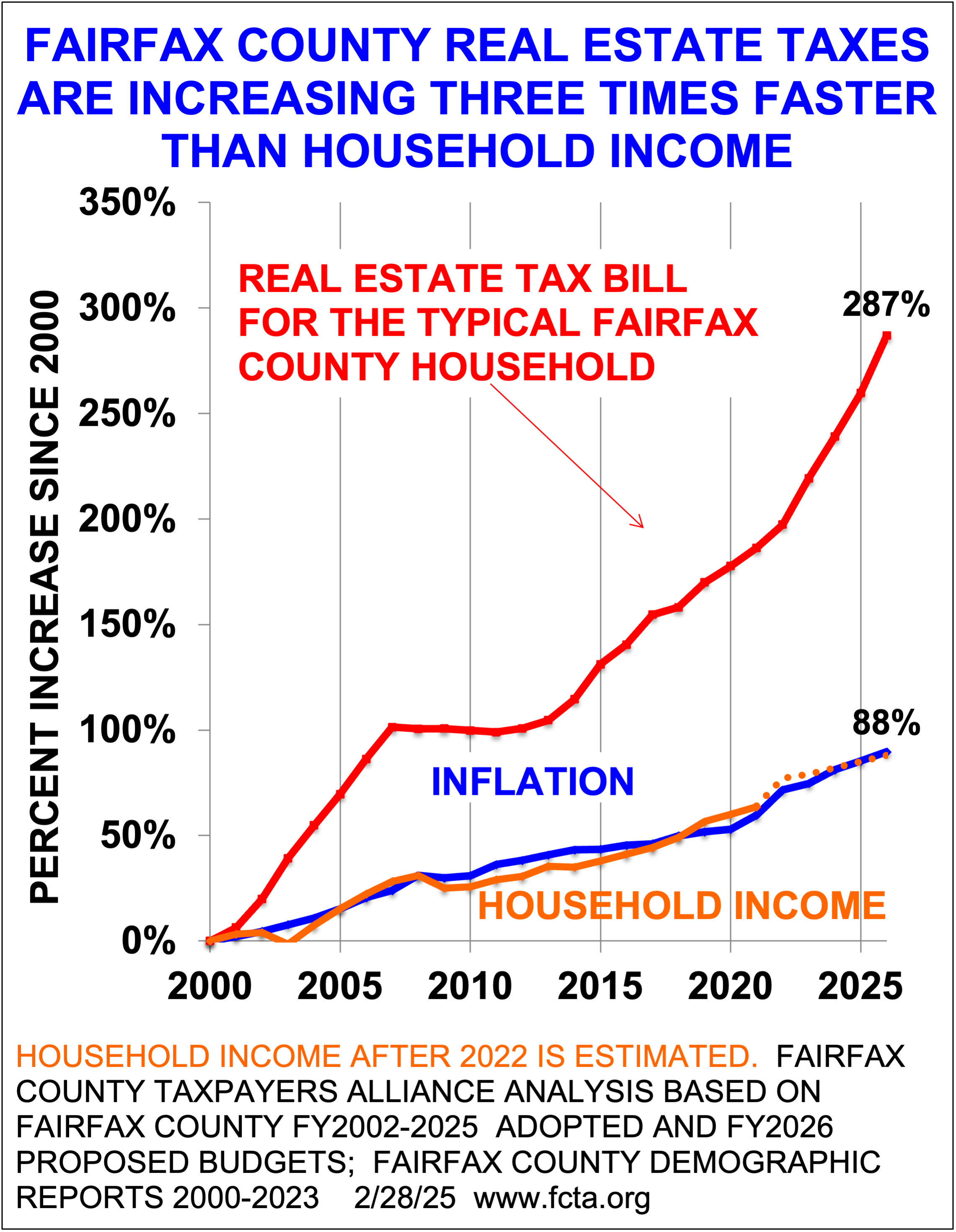
Since 2000, Fairfax County real estate taxes have increased 281% -- three times faster than inflation (90%) and nearly four times faster than household income (78%). The average annual tax bill has gone from $2,123 to $10,031. Residents are leaving.
|
|
The math is stark: A household earning $100,000 in 2000 earned roughly $178,000 by 2025. But their real estate tax bill nearly quadrupled -- from around $2,100 to over $10,000. That is $7,900 more every year extracted from the same household. (See the full 50-year chart.
When taxes grow faster than income, households have less money for food, healthcare, education, retirement, and everything else. The gap compounds every year. A family that paid $2,100 in real estate taxes in 2000 now pays $10,031 — an additional $7,900 per year that must come from somewhere.
For fixed-income residents and retirees, this is not a small number. For younger families trying to afford homeownership, it makes an already difficult market even harder. The result is what FCTA has documented for decades: residents leaving Fairfax County for lower-tax jurisdictions.
The county claims to be "data-driven." The data here are unambiguous -- taxes are rising at a rate that is disconnected from the ability of residents to pay them.
The FY2027 Proposal: Residential assessments rose 4% this year. Under Virginia law, supervisors can lower the tax rate to keep bills flat. Instead, they are proposing to keep the rate at $1.1225 -- which means every homeowner automatically pays 4% more. FCTA demands the rate be set at $1.08 to hold taxes flat.
|
While homeowners absorb one escalating tax bill, Fairfax County businesses face a stack of 18 separate levies -- from the standard real estate and sales taxes to BPOL, stormwater, RGGI (Regional Greenhouse Gas Initiative), utility taxes, and the 4% meals tax.
The cumulative burden is among the highest in Northern Virginia. When the economics no longer work, businesses leave -- taking jobs, employees, and commercial tax revenue with them. The commercial tax base has been declining relative to residential, putting even more pressure on homeowners.
This isn't a tax problem only for corporations. When businesses pay more, they hire fewer people, pay lower wages, and charge higher prices. The 18-tax burden ultimately flows to every Fairfax County resident.
(NEXT: Why Are Taxes Rising)